
The Sambalpur Rebellion
- Home
- The Sambalpur Rebellion
What Was the Movement?
The rebellion led by Surendra Sai was one of the longest and most determined regional struggles against British colonial rule in Eastern India. It began in 1827, initially triggered by the British refusal to recognize his rightful claim to the throne of Sambalpur. What started as a succession dispute soon transformed into a larger movement defending regional sovereignty, indigenous governance, and cultural identity. The British annexation of Sambalpur disrupted traditional systems of administration and imposed foreign control over land, taxation, and local authority. These actions generated widespread dissatisfaction among tribal communities, peasants, and local leaders. Surendra Sai emerged as a unifying figure who brought together diverse groups under a shared goal — resisting colonial domination and restoring legitimate rule. The movement gained renewed strength during the 1857 Indian Revolt, when anti-British uprisings spread across the country. In Western Odisha, Surendra Sai intensified guerrilla warfare, using the dense forests and rugged terrain of the region to challenge British forces effectively. His resistance was strategic, persistent, and deeply rooted in local support. Unlike many short-lived revolts, his struggle extended over several decades, demonstrating extraordinary resilience and leadership. The movement was not solely about reclaiming a throne; it symbolized a broader fight for justice, self-governance, and protection of land and traditions. Through courage, unity, and unwavering determination, the rebellion of Surendra Sai became a defining chapter in Odisha’s contribution to India’s freedom movement.
Objectives of the Movement
👑
Restoration of Rightful Rule
Sambalpur’s legitimate governance and restore traditional authority disrupted by British interference.
🚫
Resistance to Annexation
To firmly oppose unfair British expansion and administrative control imposed on the region.
🛡️
Protection of Sovereignty
To safeguard tribal rights, regional identity, land ownership, and indigenous governance systems.
🕊️
Freedom from Colonial Domination
To liberate Western Odisha from foreign rule and uphold the vision of self-governance and independence.
Role of Surendra Sai
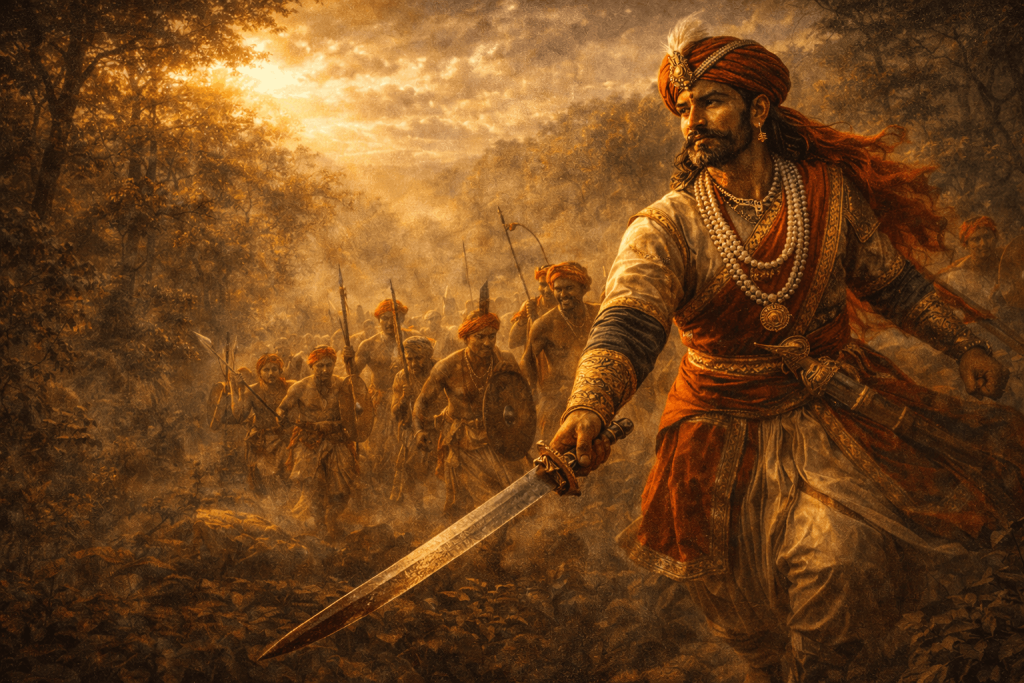
Organized Guerrilla Warfare
He skillfully used the dense forests and rugged terrain of the region to conduct effective guerrilla warfare against British forces.
Tribal Warriors & Leaders
tribal fighters, local rulers, and peasants under a shared mission to resist colonial authority and protect regional sovereignty.
Long-Term Resistance
For nearly four decades, he maintained relentless opposition to British rule, demonstrating unmatched resilience .
Inspired Regional Unity
Through his leadership and integrity, he fostered unity among the people of Sambalpur, transforming a regional conflict.
Impact
The resistance led by Surendra Sai had a profound and lasting impact on the political landscape of Odisha and the broader Indian freedom struggle. By sustaining armed opposition for decades, he directly challenged British authority in the Sambalpur region and disrupted colonial administrative control in Western Odisha. His movement demonstrated that regional and tribal resistance could stand firmly against one of the most powerful empires of the time.
Through guerrilla warfare and strong local alliances, he forced British forces to invest significant military resources to suppress the uprising. This prolonged struggle weakened colonial confidence and exposed the limitations of British control in forested and tribal territories. Beyond its military significance, the rebellion strengthened regional identity and unity among tribal communities, peasants, and local leaders. It fostered a collective spirit of resistance that inspired future movements across Odisha.
His decades-long defiance became one of the longest sustained regional revolts against British rule in India, highlighting Odisha’s vital contribution to the national freedom movement. Even after his imprisonment and death, the memory of his struggle continued to inspire pride, cultural preservation, and historical recognition. His impact remains visible today in memorials, institutions, and the enduring respect he commands as a symbol of courage and sovereignty.